Substitute teaching can be a challenging, yet highly rewarding job. Although it takes a lot of enthusiasm and hard work, you can build a set of skills that will help you become an expert substitute teacher. If you’re looking for job flexibility, days full of fun and variety, and enjoy investing in students—then substitute teaching may be for you!
You should plan on investing several hours in preparing to become a substitute teacher. School districts will often require trainings, orientation sessions, and tests to ensure that prospective substitute teachers are ready for the classroom. Also, keeping in mind that you may be asked to pay for background checks, medical tests, or training materials out of your own pocket. Although each district may have specific requirements, we will walk you through the most common requirements for substitute teachers.
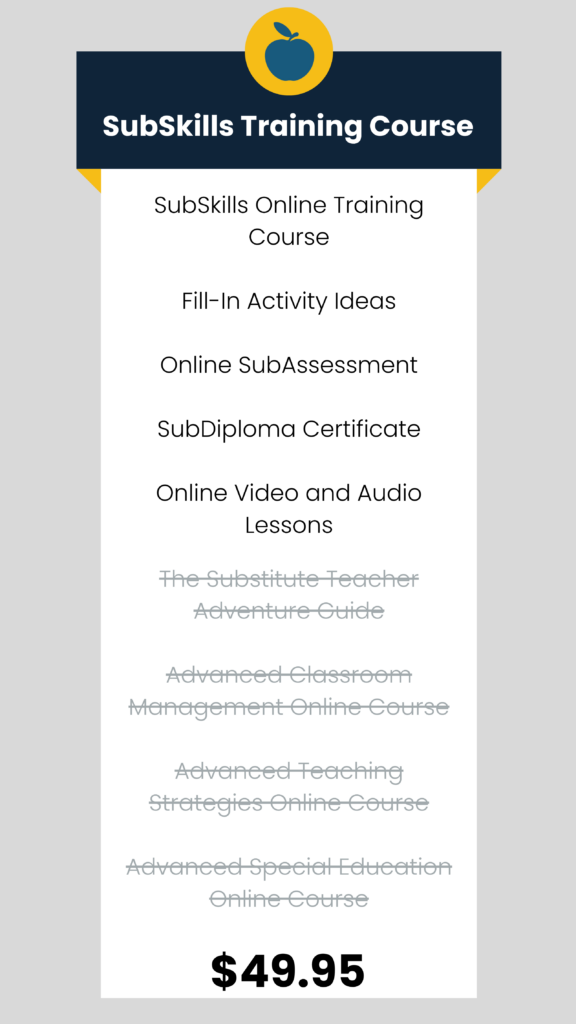
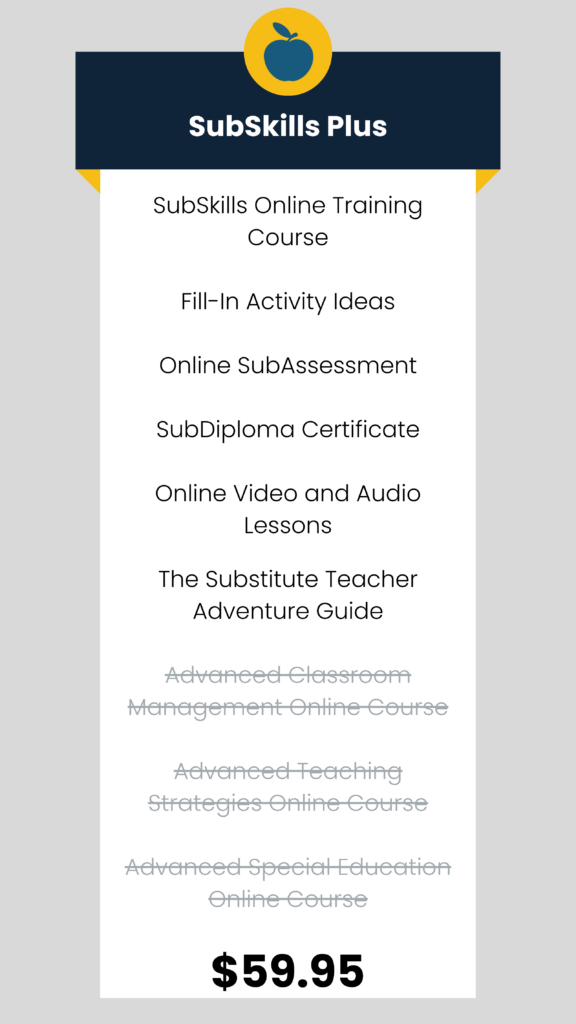
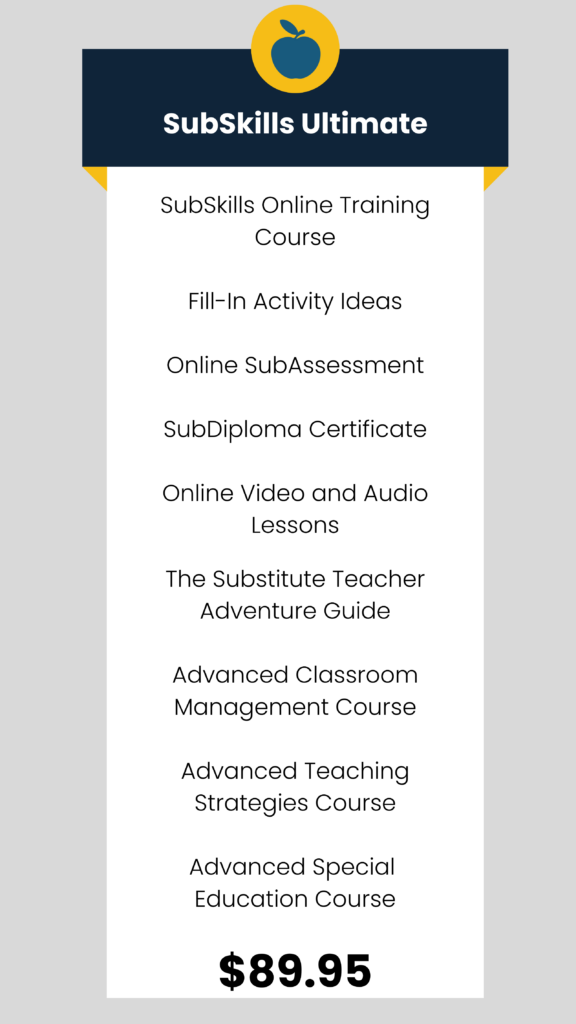
To become an excellent substitute teacher, the most critical ability you can master is how to easily manage classroom behavior and teach effectively. To learn the research proven skills and techniques to help you become a substitute teacher that is requested by students and schools, check out the SubSkills™ Basic Online Training Course or the Substitute Teacher Handbook.
A Few Facts About Substitute Teaching
- Students Spend One School Year with a Substitute Teacher
- Substitute Teachers Want to Know How to Manage Unwanted Student Behavior
- District Administrators Want Substitute Teachers Who are Professional
- Students Want Substitute Teachers Who Present Stimulating Lessons
- Substitute Teachers Love Job Flexibility and Working with Students
Is Substitute Teaching Right for You?
Those who enjoy substitute teaching usually have the following personality traits:
- Desire to work with children ages 5-18
- Able to relate to and appreciate students
- Can inspire a love of learning
- Has a good sense of humor
- Can be flexible and adjusts quickly to unique and changing circumstances
- Sets a good example for the students (model citizen)
- Love to learn
- Willing to try new things
- Patient
- Kind
- Fair
- Consistent
What Will Substitute Teaching Be Like?
- Volunteer in a classroom to see how a day might go
- Attend the school district orientation meeting or a job fair, talk to the Human Resource department to get a feel for what it’s like to be in the classroom
- Review the blog post Reasons it’s Great to be a Substitute Teacher
- If you have a friend or neighbor that is a teacher, ask if you can observe him or her
Requires College Degree
- Arizona
- California
- Connecticut
- Hawaii*
- Minnesota
- Ohio
- Oregon
- Pennsylvania
- Washington
- Wisconsin*
Requires Some College
- Illinois
- Indiana
- Iowa
- Kansas
- Michigan
- Missouri
- Nebraska
- New Jersey
- North Dakota
- Rhode Island
- Washington, DC
- West Virginia
Require High School Ed
- Alabama
- Alaska
- Arkansas
- Colorado
- Delaware
- Florida
- Georgia
- Idaho
- Kentucky
- Maine
- Maryland
- Massachusetts
- Mississippi
- Nevada
- New Mexico
- New York
- North Carolina
- Utah
- Vermont
- Virginia
Standards Set by District
- Louisiana
- Montana
- New Hampshire
- Oklahoma
- South Carolina
- South Dakota
- Texas
- Tennessee
- Wyoming
Requirements subject to change, check with state board of eduction for the most current requirements. Some states require permanent teaching license
*Requires a STEDI Course
Become a Substitute Teacher Today!
- Asking a neighbor who has a child in the school system
- Search online for the school district website
- Check the local phone book
The fastest way to find out what your local school district requires is to visit the school district’s web site. Generally they will outline the necessary steps and you may be able to download the required paperwork. Substitute teaching jobs are usually listed under “Human Resources” or “Employment.”
Depending on specific district requirements, applicants may be required to pay from $50 to $75 for background checks, tuberculosis or other medical tests. Other fees may also be added for orientation, training courses, or licensing, which can range from $40 to $100. You should also be prepared to pay small fees to obtain your diplomas, transcripts, or certifications that may need to be submitted with required paperwork.
Each grade level in K-12 education brings its own benefits and challenges. You may be asked to specify which grades and subjects you have experience in or feel most comfortable working with. However, understand that a substitute teacher who is flexible and willing to adapt can find success teaching students of all age levels. And remember that substitute teachers who get the most jobs:
- Teach multiple subjects
- Work in all grade levels
- Work in special education classes
- Work on Mondays and Fridays when the demand for substitute teachers is greater
- Recognize and praise appropriate behavior
- Which inappropriate behaviors to ignore and which to respond to
- Set and teach clear expectations
- Strategies for handling consequential student behavior
- Model expectations
- Present lesson material in an engaging way
- Have filler activities when the lesson plans end early
- Work with students who come from a wide variety of backgrounds
These skills can be identified, taught, and honed further in the Substitute Teacher Handbook or online SubSkills Training Course.
Start Today!
Click on the course below that best suits your needs.